
Backups as resources
Backup destinations, jobs and restore operations are platform concepts instead of ad-hoc scripts.
Backup creation, safety snapshots, restores, point-in-time recovery and deployment history are explicit operations with visible outcomes.
Deployments and recovery actions share an activity history, so operators can trace what changed and when without relying on shell history.
 instance / activity
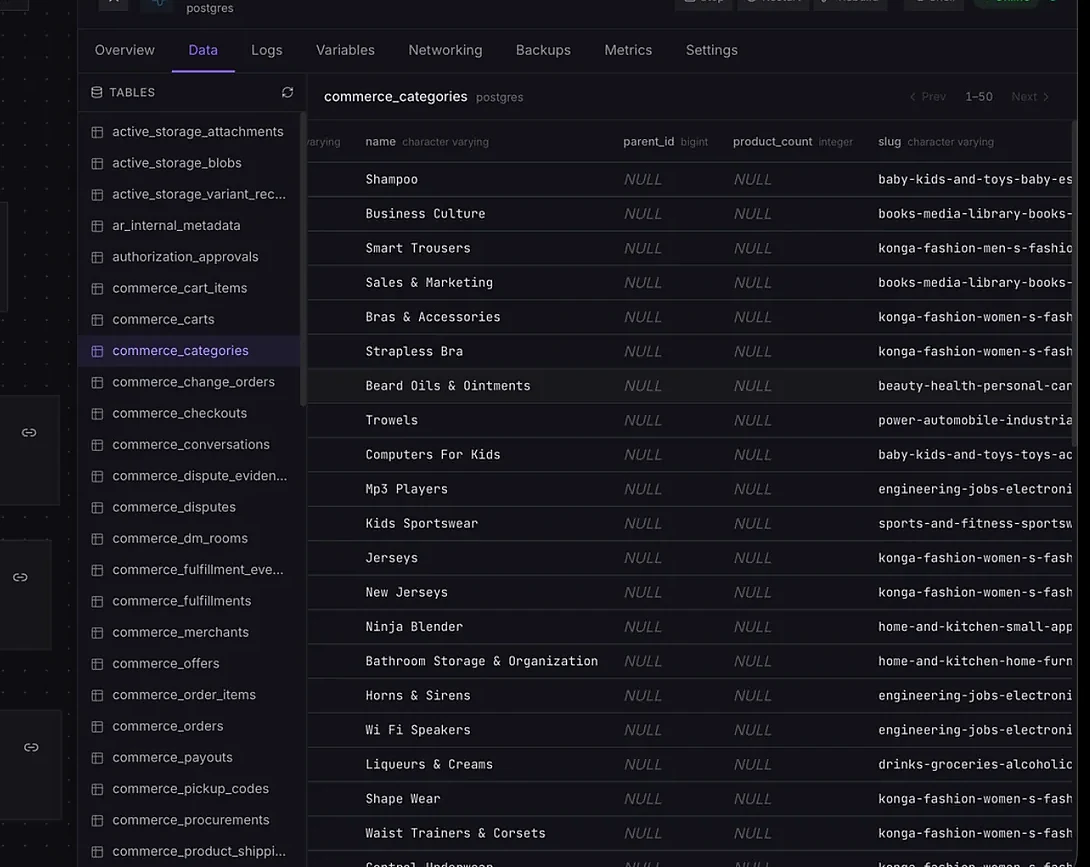 postgres / data
Database inspection, backups, networking, metrics and service settings stay attached to the datastore instead of being spread across unrelated tools.
Backup destinations, jobs and restore operations are platform concepts instead of ad-hoc scripts.
Recovery workflows preserve context around when and why a datastore is moved backward in time.
Confirmation steps and preconditions reduce the chance that recovery work creates a second incident.
Use the backup and PITR guides to set destinations, schedules and restore procedures.