Your servers.
A platform to run them.
RailDock turns Linux servers into one application control plane: Git and image deploys, project networking, databases, recovery workflows, manifests, teams, and an API.
curl -sSL https://raw.githubusercontent.com/mona-chen/raildock/main/install.sh | bash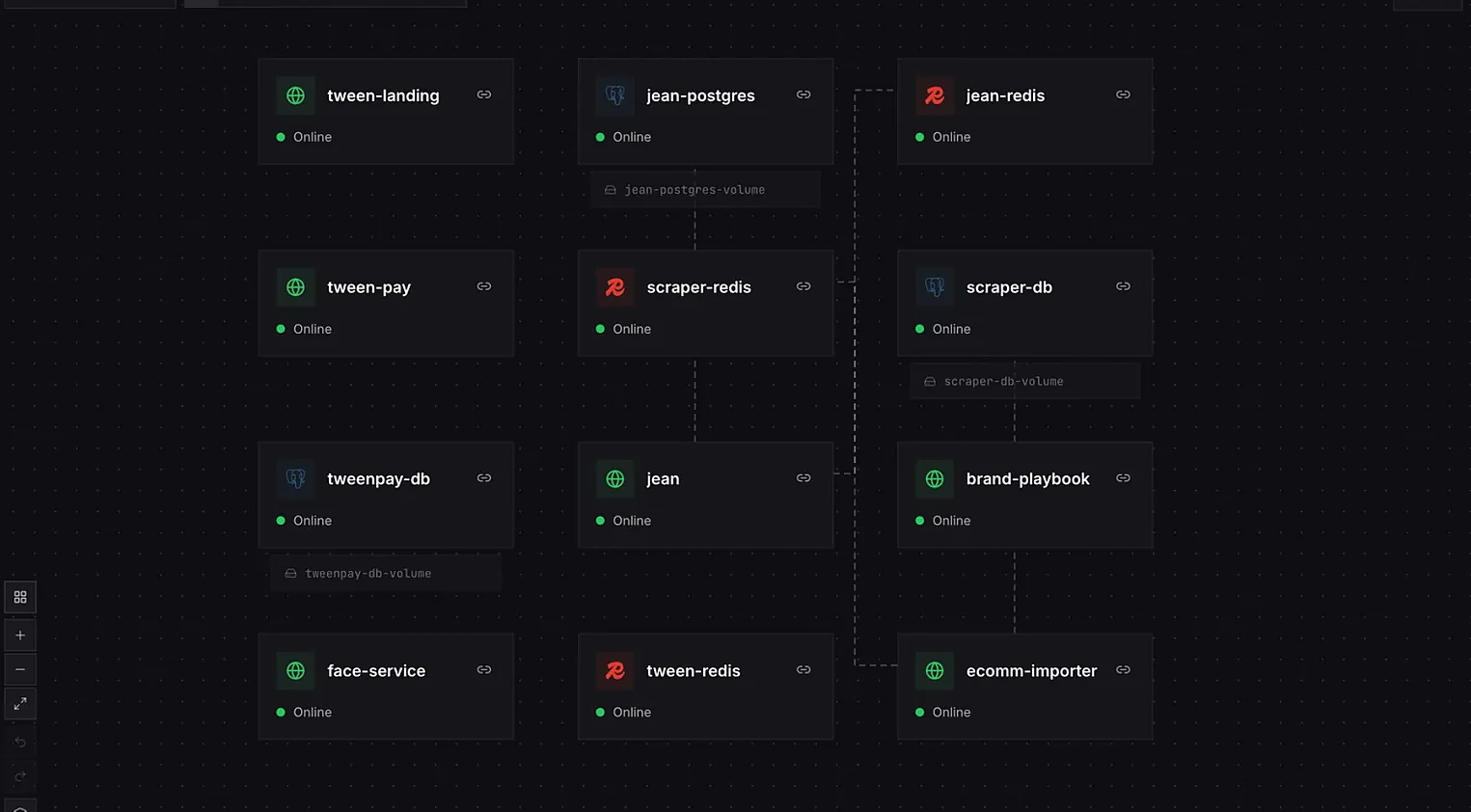
See relationships, not a list of resources.
Applications, workers, databases, caches, volumes and private links share a project boundary. The graph is useful because the lifecycle underneath it uses the same model.
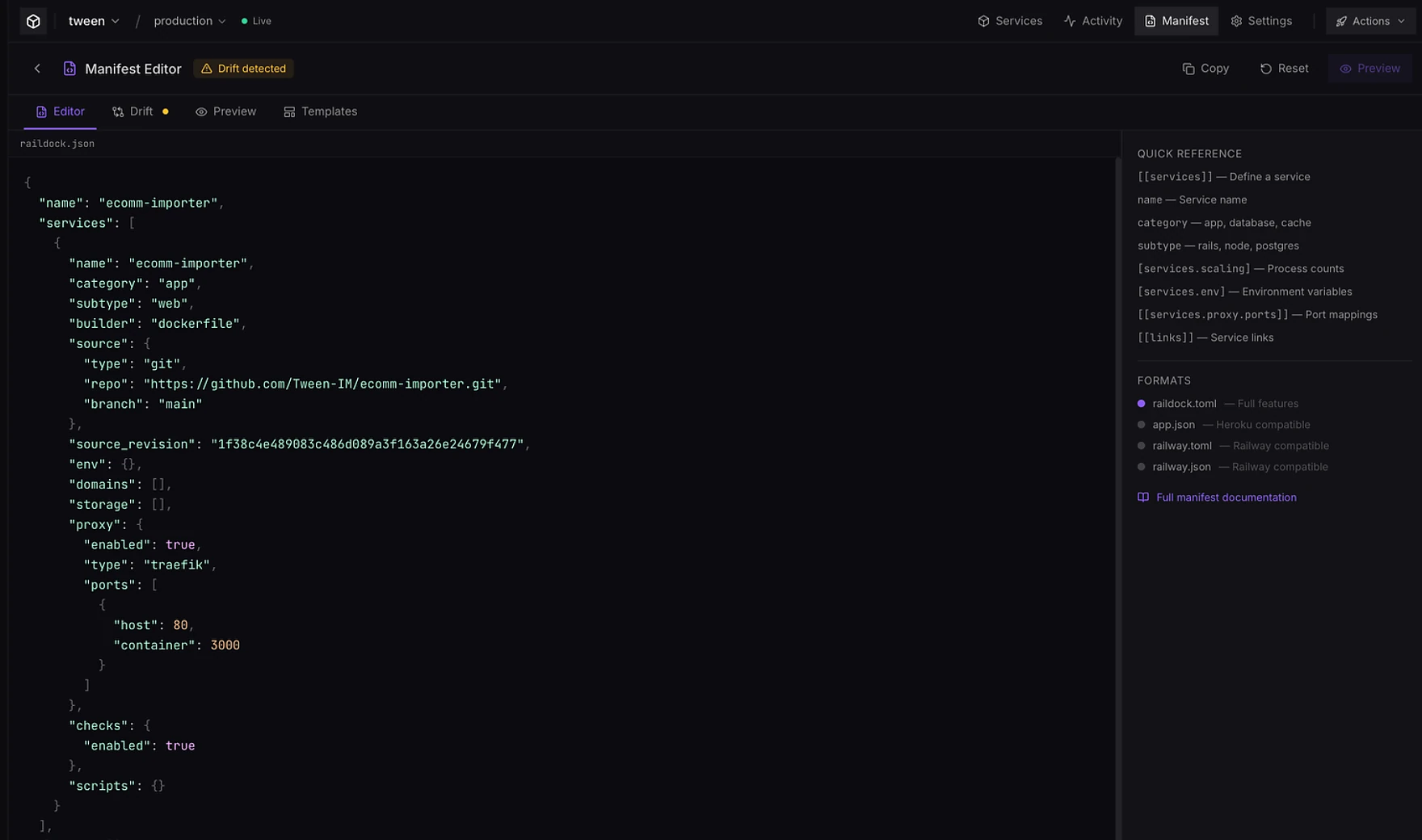
Declare the target. Inspect the drift.
The manifest editor gives operators a project-level declaration, preview and drift surface. RailDock can compare that desired state with the running project before applying changes in dependency order.
Zoom into the job at hand.
The product moves from project topology to the detail an operator needs: service lifecycle, database inspection, or a recovery trail. Each view keeps the resource and its history connected.
 service / deployments
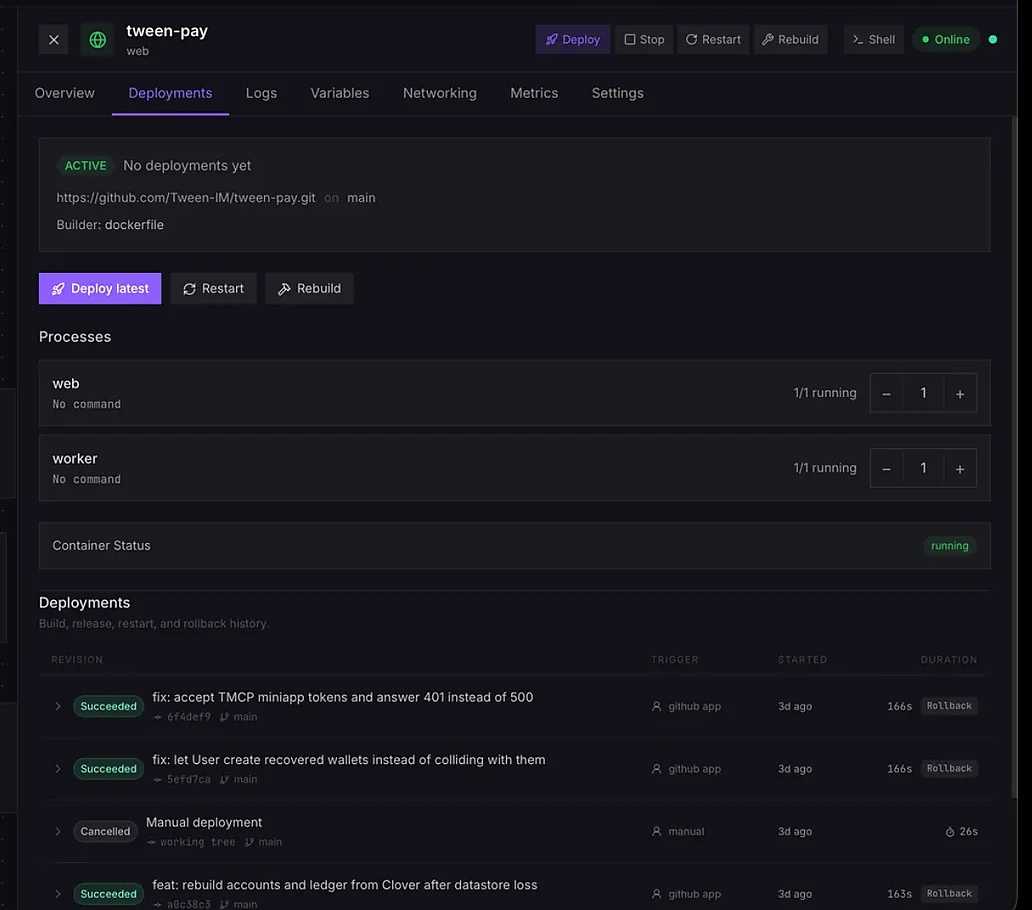
Deploy without leaving the service.
Lifecycle actions, process scale and revision history sit together, so a deploy is not detached from the runtime it changes.
A control plane above your servers—not instead of them.
RailDock coordinates lifecycle work from Rails and the API, then executes on Linux hosts over SSH through Dokku and host engines. Compute location, host hardening and network policy remain yours.
Open where the trust boundary matters.
The control plane is MIT licensed and the API, docs and runtime architecture are inspectable.
Turn a Linux host into an application platform.
Install RailDock, connect a host, and build the project from the same control plane you will use to operate it.